What Is Virtual Patient Simulation in Medical Education?
Medical education has always relied on a progression from theory to practice. Students study anatomy, physiology, and pathology in lectures and textbooks, then gradually move to clinical rotations where they interact with real patients. But the gap between book knowledge and bedside skills is wide, and the stakes are high. Virtual patient simulation bridges that gap by providing a safe, repeatable environment where students can practice clinical reasoning before entering the hospital.
How Virtual Patient Simulation Works
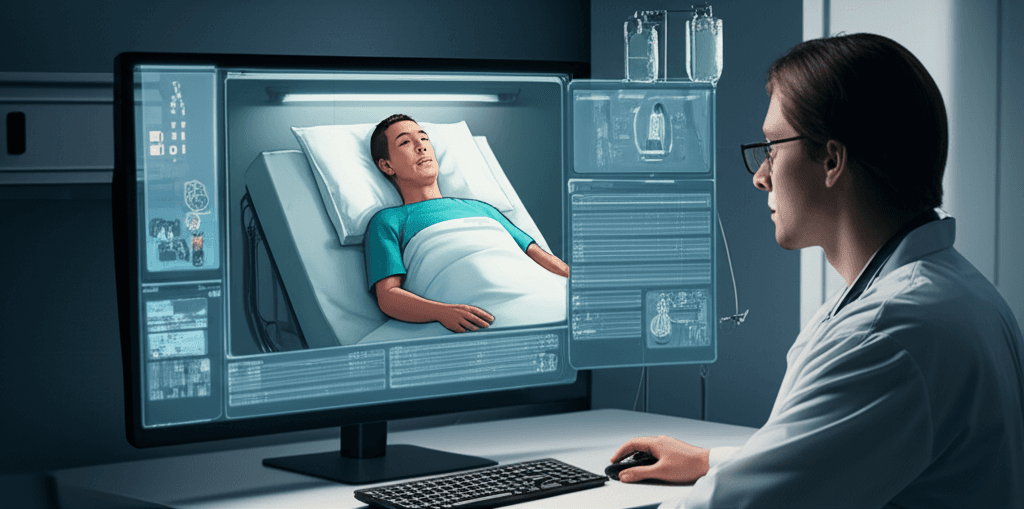
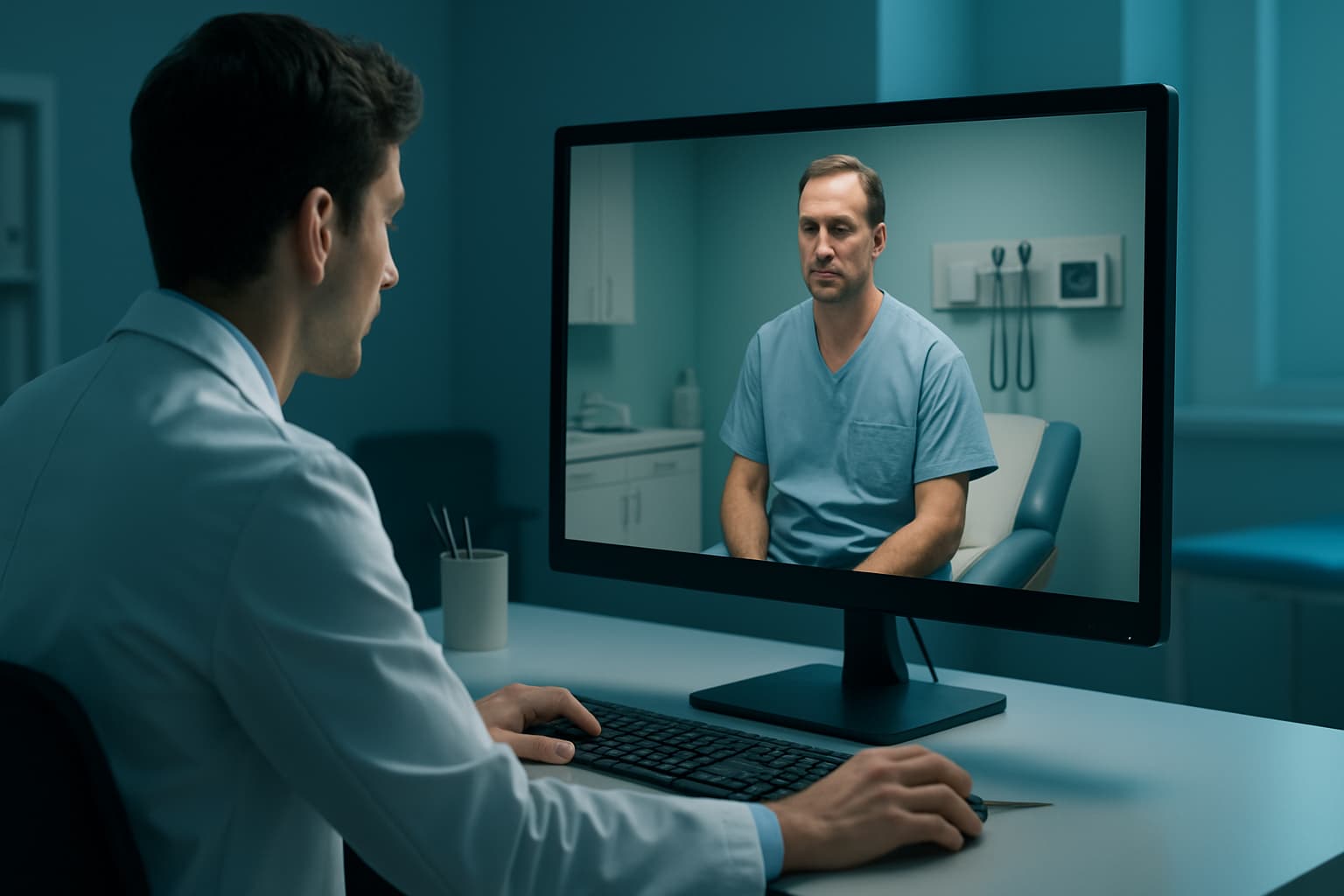
A virtual patient is a software-based representation of a clinical case. The student takes the role of a clinician: they interview the patient about symptoms and history, order and interpret diagnostic tests, form differential diagnoses, and prescribe treatment plans. The system tracks every decision, providing feedback on clinical reasoning accuracy.
Modern implementations use 3D environments that replicate a realistic clinic setting. The student walks through a virtual hospital, enters exam rooms, and interacts with patients who present symptoms, respond to questions, and react to prescribed treatments. This goes beyond simple multiple-choice scenarios by creating an immersive experience that mirrors actual clinical workflow.
The Scale of Practice Available
A single medical school rotation might expose a student to a limited number of cases in any given specialty. Virtual simulation platforms can offer hundreds of cases across multiple specialties. For example, a comprehensive platform might include cases spanning cardiology, pulmonology, gastroenterology, nephrology, endocrinology, rheumatology, hematology, oncology, pathology, internal medicine, infectious diseases, and neurology. Students can practice rare conditions they might never encounter during rotations.
Key Benefits for Medical Schools
Standardized assessment is one of the strongest advantages. Every student faces the same patient, the same symptoms, and the same clinical complexity. This eliminates the variability inherent in clinical rotations, where one student might see a textbook case while another sees an atypical presentation. Faculty can objectively compare student performance.
Repeatability matters equally. A student who struggles with cardiac auscultation can practice the same scenario dozens of times. In a real clinical environment, that repetition simply is not possible. The virtual environment never gets tired, never has scheduling conflicts, and presents the same case consistently.
Risk-free learning is the most obvious benefit. Students learn from mistakes without any possibility of patient harm. A wrong diagnosis or inappropriate treatment in a virtual scenario becomes a teaching moment, not a safety incident.
Beyond Simple Case Studies
The most effective virtual patient platforms go beyond isolated case scenarios. They integrate multiple learning modalities: 3D anatomical models that students can explore layer by layer, pathomorphology visualizations showing disease effects on organ systems, procedure training with step-by-step checklists, and interactive medical films that demonstrate clinical techniques.
This multimodal approach means students do not just read about a condition and answer questions. They examine the patient, visualize the underlying anatomy and pathology, learn the relevant procedures, and make treatment decisions, all within a single integrated environment.
Implementation Considerations
For universities evaluating virtual patient platforms, key considerations include the breadth of clinical cases, the realism of patient interactions, the quality of feedback mechanisms, and integration with existing curricula. The platform should support both self-directed learning and instructor-led sessions, and it should provide analytics that help faculty identify knowledge gaps across the student body.
The most effective implementations treat virtual simulation not as a replacement for clinical rotations but as preparation for them. Students who have practiced clinical reasoning in virtual scenarios arrive at their rotations better prepared to learn from real patient encounters.