7 Interactive Modes That Transform Medical Training
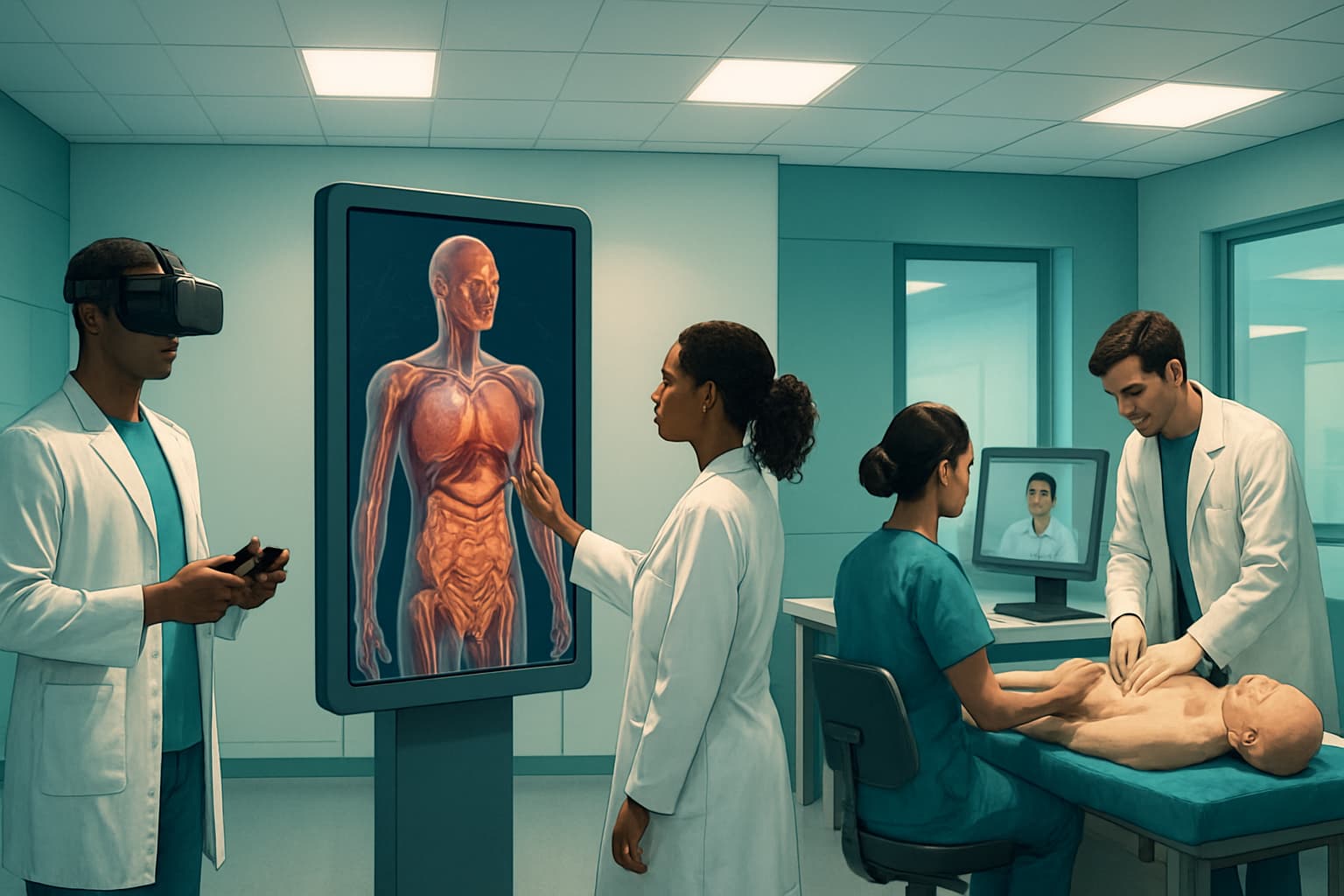
Medical training requires mastery of many different skills: clinical reasoning, anatomical knowledge, procedural technique, and diagnostic interpretation. No single teaching method addresses all of these effectively. The most comprehensive medical simulation platforms address this by offering multiple interactive modes, each designed for a specific type of learning.
1. Virtual Patients: Clinical Reasoning in Action
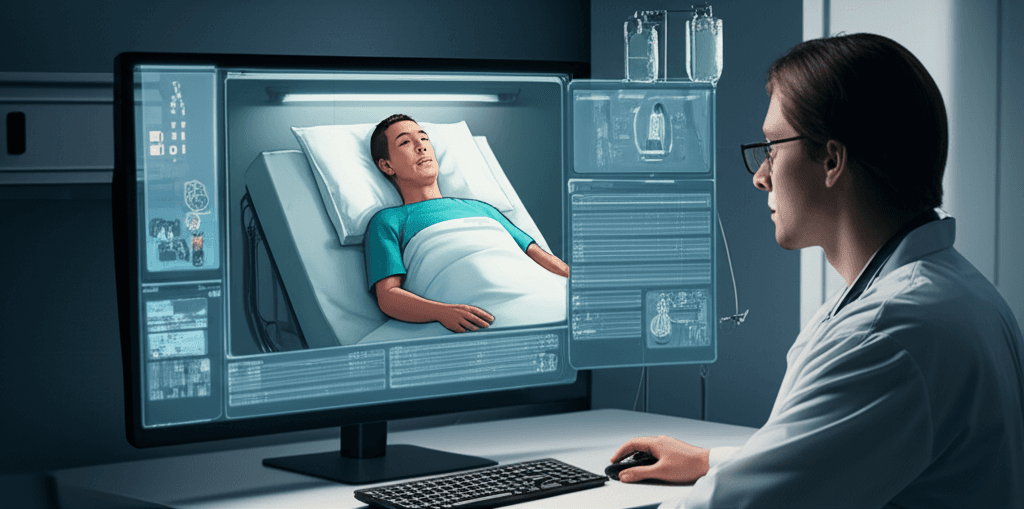
The virtual patient mode places students in the role of a practicing clinician. They interview patients presenting with symptoms, take a medical history, perform examinations, order diagnostic tests, interpret results, and formulate treatment plans. The key differentiator from textbook case studies is interactivity: the patient responds to questions, reacts to treatments, and the case evolves based on the student's decisions.
This mode is particularly valuable for developing differential diagnosis skills. When a patient presents with chest pain, the student must systematically work through cardiac, pulmonary, gastrointestinal, and musculoskeletal possibilities, ordering appropriate investigations to narrow the diagnosis. Each decision point is tracked and scored.
2. 3D Anatomy: Spatial Understanding of the Human Body
Traditional anatomy education relies on cadaver dissection and 2D illustrations. A 3D anatomy mode provides an interactive human body model where students can show and hide individual anatomical structures, rotate the view to any angle, and zoom into specific regions. This spatial manipulation builds the three-dimensional understanding that is essential for surgery, imaging interpretation, and physical examination.
3. Pathomorphology: Visualizing Disease Effects
Understanding how disease changes organ structure and function is fundamental to medical practice. A 3D pathomorphology mode provides organ models that students can manipulate, showing the progression from healthy tissue to various pathological states. When a platform offers models covering organs across multiple specialties, students can directly see how conditions like cirrhosis alter liver architecture or how cardiomyopathy changes heart structure.
This visual, interactive approach to pathology complements traditional histology and pathology lectures by giving students a macroscopic, three-dimensional perspective on disease processes.
4. Medical Procedures: Step-by-Step Skill Building
Procedural skills require a different type of learning than clinical reasoning. The manipulation mode provides step-by-step checklists for medical procedures: from basic skills like IV insertion and blood pressure measurement to more complex procedures. Students work through each step in sequence, receiving feedback on technique and completeness. This builds procedural confidence before students perform these tasks on real patients.
5. Interactive Medical Films: Learning Through Observation
Some clinical skills are best learned by watching experienced practitioners. An interactive medical film library provides curated video content covering internal medicine, oncology, pathology, and other specialties. Unlike passive video lectures, interactive films include decision points, knowledge checks, and branching scenarios that keep students engaged and test comprehension.
6. Theory Modules: Structured Knowledge Foundation
Clinical skills depend on a solid theoretical foundation. Dedicated theory modules provide structured study materials on disease information, organized by specialty and topic. These modules ensure that all students have access to the same comprehensive reference material, regardless of the textbooks available at their institution.
7. Social Learning: Peer Collaboration
Medicine is a collaborative profession. A social learning mode creates a peer communication environment within the educational platform, where students can discuss cases, share insights, and learn from each other's clinical reasoning. This mirrors the team-based nature of actual medical practice and encourages the kind of collaborative problem-solving that characterizes effective healthcare teams.
The Integration Advantage
The real power of multiple modes comes from integration. A student studying heart failure can interview a virtual patient with the condition, explore the cardiac anatomy in 3D, visualize the pathological changes in the heart, practice the relevant physical examination procedures, watch an interactive film on treatment approaches, review the theoretical material, and discuss the case with peers. All within a single platform. This multimodal approach creates deeper, more durable understanding than any single teaching method.