Interprofessional Team Simulation: Training Healthcare Teams to Work Together
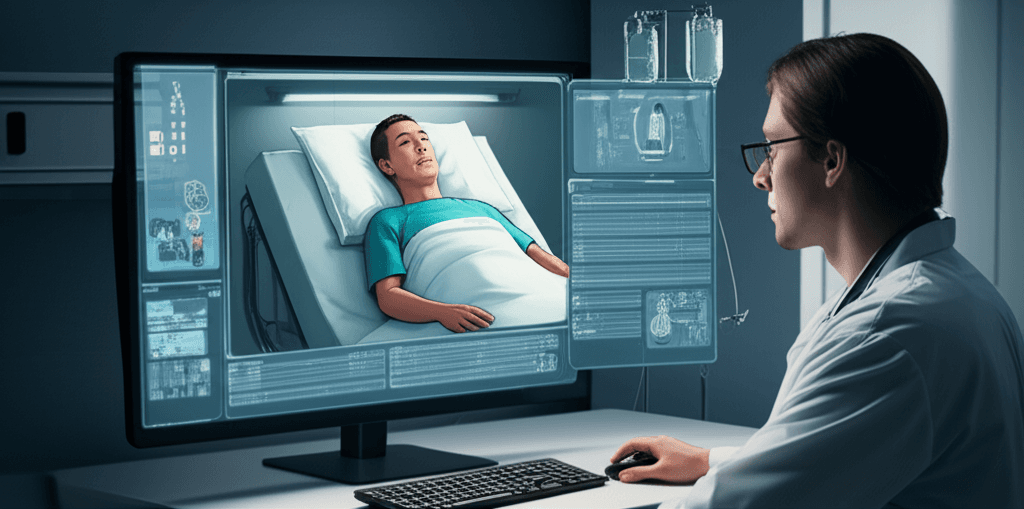
Healthcare is delivered by teams, but healthcare professionals are trained in professional silos. Physicians, nurses, pharmacists, respiratory therapists, and other allied health professionals typically complete their training with minimal structured exposure to the roles, perspectives, and communication norms of their future colleagues. The result is teams that are composed of individually competent professionals who have not learned to function as an integrated unit. Interprofessional simulation training directly addresses this structural gap by creating shared learning environments where different professional groups practice teamwork together.
Patient Safety and Team Communication
Landmark patient safety research, including the Institute of Medicine's 'To Err is Human' report, identified communication failures as a root cause in a substantial proportion of preventable adverse events. Subsequent analysis of sentinel events by the Joint Commission found that over 70% of root causes involved communication failures. These failures most commonly occur at transitions of care, during high-acuity emergencies, and in situations where hierarchical dynamics suppress important clinical information.
Interprofessional simulation creates structured opportunities to practice exactly the interactions where communication most commonly fails. Handover scenarios, resuscitation events, and perioperative briefings can all be designed as interprofessional simulation exercises where teams practice communication under realistic conditions with expert facilitation and structured debriefing.
Crew Resource Management in Healthcare
Crew resource management (CRM) principles, originally developed in aviation, have been adapted for healthcare team training. Core CRM concepts — situational awareness, cross-monitoring, assertive communication, closed-loop communication, and shared mental model — map directly onto the challenges of healthcare team coordination. TeamSTEPPS, developed by the Agency for Healthcare Research and Quality, provides a structured CRM-based training framework specifically validated for healthcare teams.
Interprofessional simulation provides the practice environment for CRM skill development. Scenarios that create information asymmetry between team members — where the nurse has critical clinical information that the physician does not — test whether team members feel empowered to speak up and whether the team culture supports that communication. Repeated practice in these scenarios builds the communication habits that protect patients in real clinical environments.
Designing Effective Interprofessional Scenarios
Interprofessional simulation scenarios must be designed to require genuine interdependence between professional roles. Scenarios where any professional could complete the task alone do not create the dynamics needed for team training. Effective scenarios are designed so that information, skills, or authority are distributed across the team — success requires integration of different professional contributions.
Debriefing interprofessional sessions requires particular skill because different professional cultures have different communication norms, authority expectations, and attitudes toward error disclosure. Facilitators must be able to navigate these cultural differences while maintaining psychological safety for all participants and directing the discussion toward the shared goal of improved patient care.
Measuring Team Performance
Team performance assessment requires different tools than individual competency assessment. Validated instruments like the Team Emergency Assessment Measure (TEAM) and the Clinical Teamwork Scale provide structured frameworks for rating team behaviors across dimensions including communication, cooperation, situational awareness, and task management.
Longitudinal tracking of team performance through simulation allows programs to document improvement over time and to identify teams that require additional support. Organizations that conduct regular interprofessional simulation training and track team performance metrics have documented improvements in clinical outcomes including reduced time to intervention in emergencies and lower rates of communication-related adverse events.