Medical Simulation Certification: What Healthcare Educators Need to Know
As medical simulation has matured from an experimental educational approach to a standard component of healthcare training worldwide, a structured ecosystem of accreditation, certification, and credentialing has developed around it. For simulation program directors, understanding this certification landscape is essential for building programs that are recognized as meeting quality standards, for supporting faculty in obtaining professional credentials, and for positioning simulation as a credible component of institutional educational infrastructure.
Healthcare Simulation Accreditation
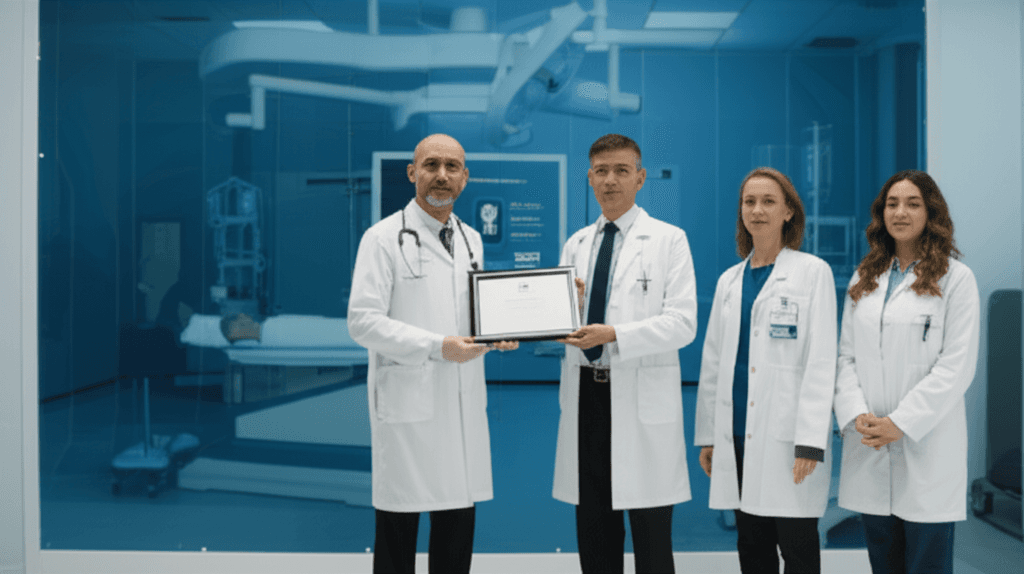
The Society for Simulation in Healthcare (SSH) offers the most widely recognized accreditation program for healthcare simulation programs in the United States and internationally. SSH accreditation evaluates simulation programs across domains including mission and governance, personnel, facilities, technology, evaluation, and educational standards. Programs that achieve SSH accreditation demonstrate adherence to established quality standards and gain recognition that supports grant funding, academic partnerships, and institutional credibility.
The Accreditation Council for Graduate Medical Education (ACGME) increasingly specifies simulation requirements within specialty-specific residency program requirements. Residency programs seeking accreditation or re-accreditation must demonstrate access to simulation facilities and curricula that meet these specialty-specific requirements.
Faculty Certification Pathways
The Society for Simulation in Healthcare offers the Certified Healthcare Simulation Educator (CHSE) credential, which recognizes simulation educators who demonstrate competency in simulation methodology, educational theory, assessment, and program management. The CHSE credential is increasingly recognized as a quality indicator for simulation faculty and supports career development in the growing simulation education profession.
For simulation specialists who manage technical operations, the Certified Healthcare Simulation Operations Specialist (CHSOS) provides a parallel credential that recognizes technical expertise in simulation equipment, AV systems, and simulation center operations. Both credentials require documented experience in simulation and passing a knowledge-based examination.
International Certification Standards
International standards for simulation are developed through organizations including the International Nursing Association for Clinical Simulation and Learning (INACSL), which publishes the Healthcare Simulation Standards of Best Practice, and the Association for Medical Education in Europe (AMEE), which has published simulation guidelines that influence practice internationally. For institutions developing simulation programs outside the United States, these international standards provide relevant guidance that is not US-specific.
Regional professional societies in Asia, Europe, Middle East, and other regions also provide certification and accreditation frameworks that are locally relevant. Institutions building simulation programs should identify both international standards and local regulatory requirements when designing quality assurance processes.