Surgical Skills Simulation: From Bench Training to the Operating Room
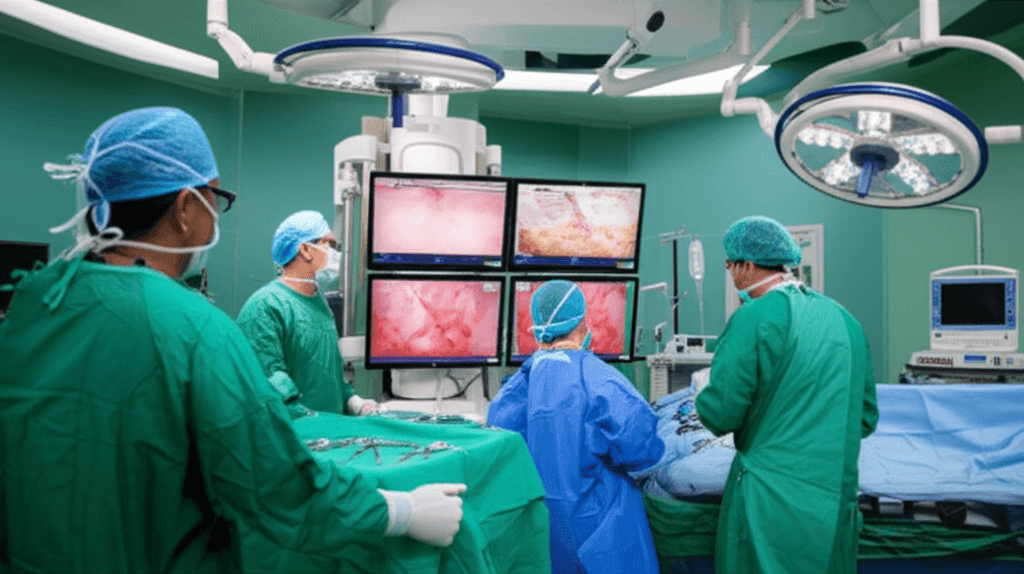
The operating room has historically been the primary training ground for surgical skill development. Trainees learned by observing, assisting, and gradually performing procedures under supervision, building skill incrementally over years of training. This model is increasingly challenged by reduced working hours, growing patient safety expectations, and the recognition that the operating room is an expensive and irreplaceable environment that should not be used for initial skill acquisition. Simulation-based surgical training provides a more efficient, safer, and more standardized path to operative competency.
The Spectrum of Surgical Simulation
Surgical simulation spans from low-tech bench models to high-fidelity virtual reality systems. Box trainers for laparoscopic surgery, suturing models for open procedures, and partial task trainers for specific procedural components sit at the low-technology end. These are effective, inexpensive, and accessible — most surgical training programs can establish basic bench training infrastructure without major financial investment.
High-fidelity surgical simulators for laparoscopic, robotic, endoscopic, and vascular procedures occupy the premium end of the spectrum. These systems provide haptic feedback, anatomical realism, and sophisticated performance metrics that allow precise characterization of a trainee's technical skill level. Research consistently demonstrates that skills acquired on these simulators transfer to the operating room, reducing operating times, complication rates, and the need for direct instructor intervention in actual procedures.
Procedural Skill Acquisition and Transfer
The learning curve for surgical procedures is well-characterized: performance improves rapidly in the early stages and plateaus as competency is achieved. Simulation allows trainees to move along this learning curve in a context where errors have no patient consequences. The critical research question has shifted from whether skills transfer to how many repetitions at what performance threshold are required before operating room performance matches that of an experienced surgeon.
Evidence supports the concept of proficiency-based progression — trainees advance to the operating room not after a fixed number of simulation sessions but when they demonstrate performance that meets objectively defined competency standards. This approach ensures that every trainee achieves equivalent competency before performing on real patients, regardless of individual differences in learning speed.
Integration with Surgical Residency Programs
The most effective surgical simulation programs are integrated deliberately into residency curricula rather than offered as optional supplementary training. Simulation sessions are scheduled, attendance is mandatory, and performance is tracked and used to guide clinical progression decisions. Programs that embed simulation in this way produce residents who enter independent practice with higher technical skill levels and fewer intraoperative complications.
Structured simulation curricula for common surgical procedures — appendectomy, cholecystectomy, hernia repair, bowel resection — create a shared framework of technical expectations across training programs. Residents who complete these structured curricula arrive at fellowship programs with verified competencies rather than inconsistent experience-dependent skills.
The Future of Surgical Simulation
Advances in haptic technology, anatomical modeling, and AI-driven feedback are rapidly improving the fidelity and educational value of surgical simulators. Future systems will be able to replicate tissue properties, intraoperative bleeding, and anatomical variations with accuracy approaching that of real surgery. These developments will extend the range of procedures that can be effectively trained through simulation and will further reduce the dependence on the operating room as a training environment.
The long-term trajectory of surgical training is toward simulation-verified competency as the standard for operating room progression. The goal is not to eliminate operative training but to ensure that every patient operated on by a trainee is exposed only to a surgeon who has already demonstrated the relevant skills in simulation — a standard that protects patients while producing better-trained surgeons.