Benefits of Medical Simulation Training for Clinical Skills
The transition from medical student to practicing clinician is one of the most demanding journeys in professional education. Students spend years memorizing anatomy, biochemistry, pharmacology, and pathology, yet many report feeling underprepared when they first face a real patient. Medical simulation training addresses this preparation gap by creating structured environments where students develop clinical skills through practice rather than passive learning.
Diagnostic Reasoning Under Pressure
One of the most valuable skills a clinician develops is the ability to think systematically under pressure. When a patient presents with acute abdominal pain, the physician must simultaneously consider appendicitis, cholecystitis, pancreatitis, bowel obstruction, ectopic pregnancy, and dozens of other possibilities. This differential diagnosis process requires pattern recognition, knowledge recall, and logical elimination happening in real time.
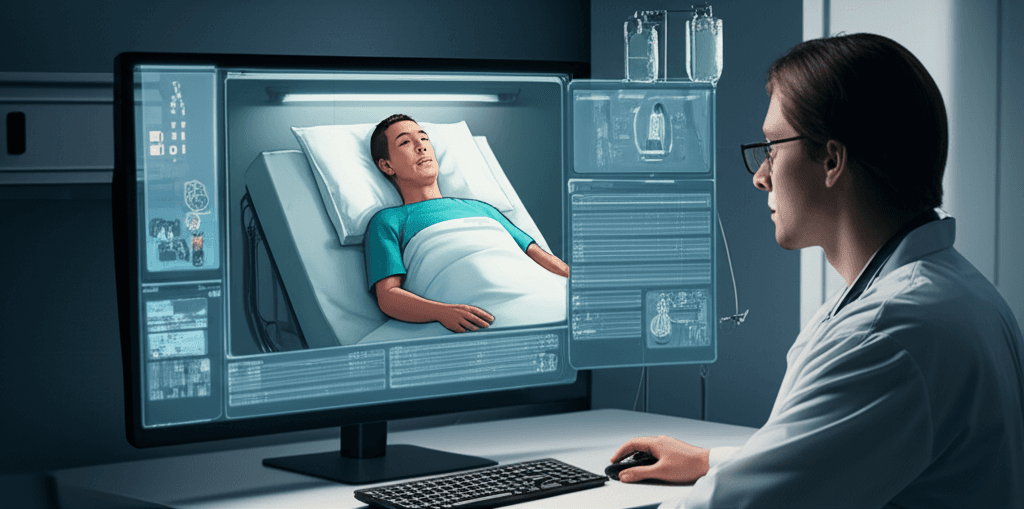
Simulation platforms allow students to practice this reasoning process repeatedly across hundreds of clinical scenarios. Each case presents a unique combination of symptoms, history, and examination findings. The student must navigate the diagnostic process from initial presentation through to final diagnosis, receiving feedback at every decision point. This deliberate practice builds the cognitive frameworks that experienced clinicians rely on instinctively.
Procedural Confidence Before Patient Contact
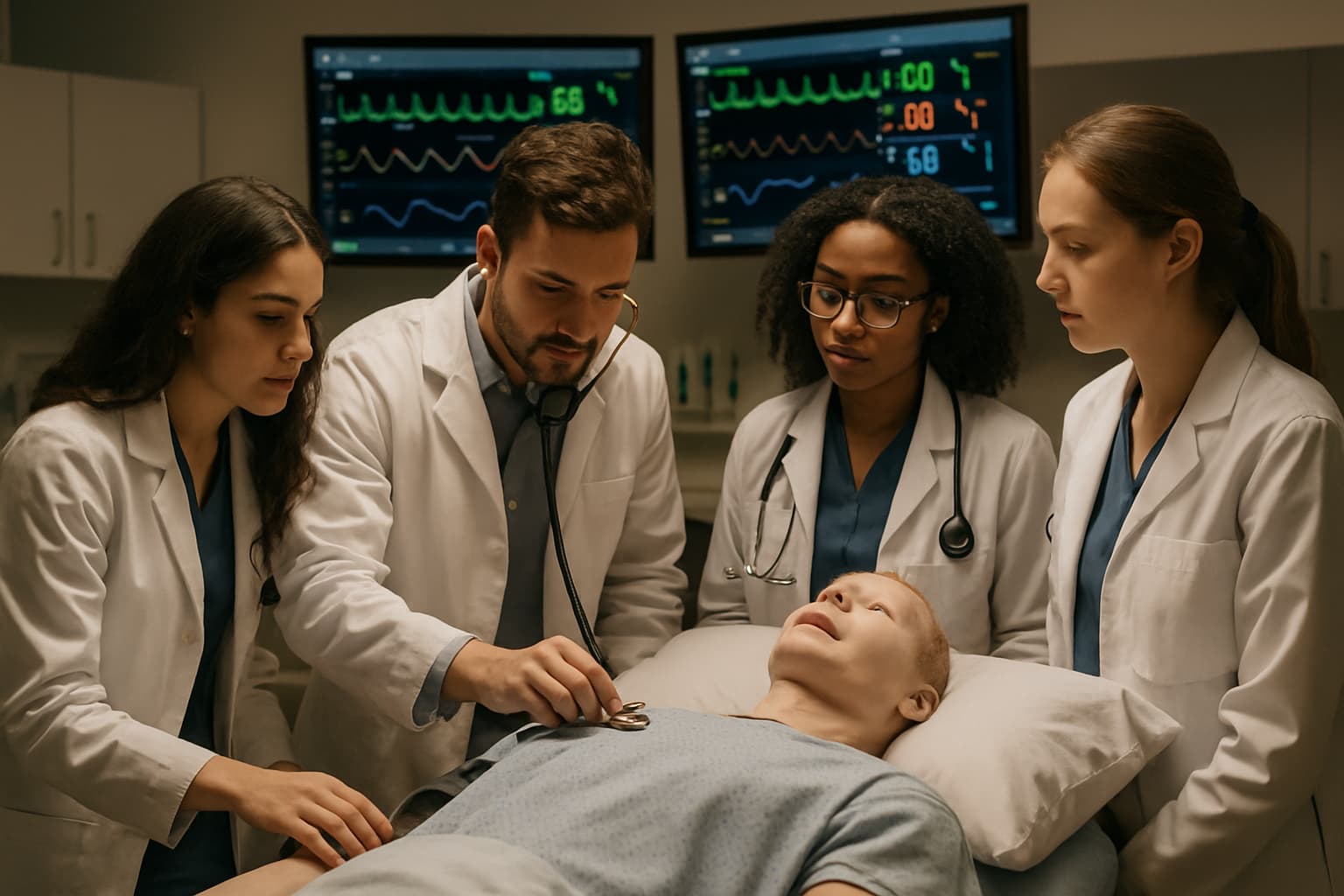
Medical procedures carry inherent risk. Whether inserting a central venous catheter, performing a lumbar puncture, or conducting a focused cardiac ultrasound, the first few attempts are always the most error-prone. Simulation-based procedural training allows students to make those early mistakes in a controlled environment where no patient can be harmed.
Step-by-step procedural checklists guide students through each phase of a procedure, ensuring completeness and correct technique. Students can repeat procedures as many times as needed until they achieve proficiency, something that is logistically impossible in a clinical setting where procedures are performed as needed, not as scheduled training exercises.
Standardized Assessment Across Cohorts
Traditional clinical assessments suffer from variability. One student may encounter a cooperative patient with textbook symptoms during their examination, while another faces an anxious patient with atypical presentation. Simulation eliminates this variability by presenting every student with identical clinical scenarios, enabling true apples-to-apples comparison of clinical competence.
Faculty can use simulation-based assessments to identify specific knowledge gaps across the student body. If a significant portion of students consistently mismanage a particular condition, that signals a curriculum gap that can be addressed proactively rather than discovered during residency.
Evidence of Improved Outcomes
Research in medical education consistently demonstrates that simulation-trained students perform better in clinical settings. Studies published in journals including Academic Medicine and Medical Education have shown improvements in procedural success rates, diagnostic accuracy, and clinical decision-making speed among students who received simulation-based training compared to traditional methods alone.
The mechanism is straightforward: practice improves performance. Medical simulation provides the volume and variety of practice that clinical rotations alone cannot deliver, particularly for uncommon conditions and high-stakes procedures where real-world repetition opportunities are limited.
Cost-Effectiveness for Institutions
While simulation platforms require upfront investment, the long-term economics are favorable. A single simulation platform can serve hundreds of students simultaneously, across all specialties and skill levels. Compare this to the cost of standardized patients (trained actors), which runs to several hundred dollars per student per hour, or the cost of extending clinical rotation time, which requires additional preceptor capacity and clinical site agreements.
Software-based simulation scales efficiently. Adding more students to a platform incurs minimal marginal cost, while the educational content, once developed, serves cohort after cohort without degradation.