Teaching Clinical Communication Skills Through Virtual Patient Encounters
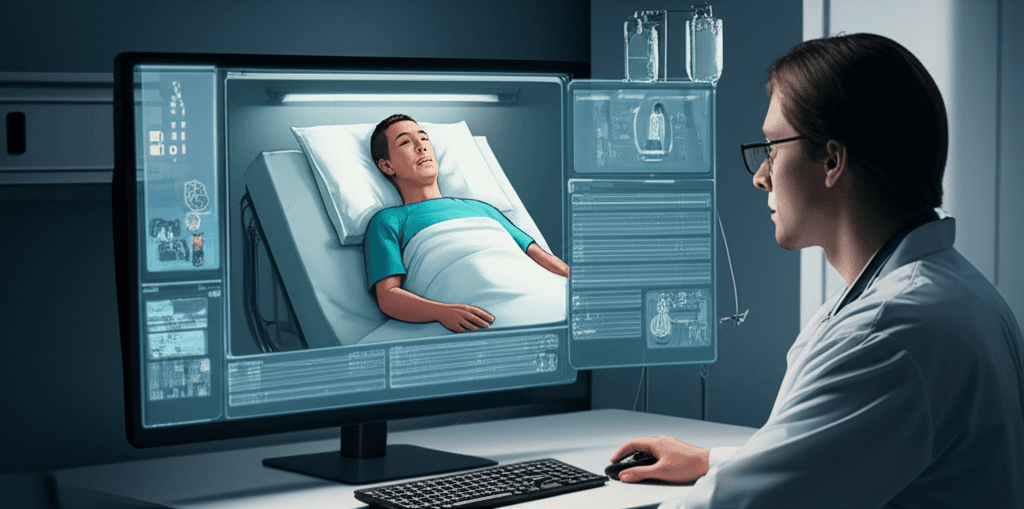
Clinical communication encompasses far more than the words exchanged between clinician and patient. It includes the structure of the clinical encounter, the ability to elicit and respond to patient concerns, the communication of uncertainty and risk in ways patients can understand, the negotiation of management plans that account for patient values, and the interpersonal dynamics that determine whether a patient leaves the encounter feeling heard and cared for. These skills are teachable, but they require practice in realistic contexts. Virtual patient simulation provides that context at scale.
The Evidence for Communication Skills Training
Research has demonstrated that clinical communication skills can be significantly improved through structured training. Studies using the Calgary-Cambridge Guide and similar structured communication frameworks show that medical students and residents who receive simulation-based communication training score higher on objective assessments, receive better evaluations from standardized patients, and demonstrate different communication behaviors in subsequent clinical encounters.
The effects extend beyond student satisfaction. Patients of clinicians with stronger communication skills demonstrate better adherence to treatment recommendations, better outcomes in chronic disease management, and higher satisfaction with care. The economic and safety implications of communication quality are substantial: hospitals with higher patient communication scores also tend to have lower rates of malpractice claims.
Challenging Communication Scenarios
Virtual patient platforms can present communication challenges that are difficult to practice in any other educational context. Breaking bad news — delivering a cancer diagnosis, discussing a poor prognosis, informing a patient of an unexpected complication — is emotionally demanding and requires skills that can only be developed through practice. The Situation-Background-Assessment-Recommendation (SBAR) structure, the SPIKES protocol for delivering bad news, and other structured communication frameworks can be practiced systematically in simulation with appropriate feedback.
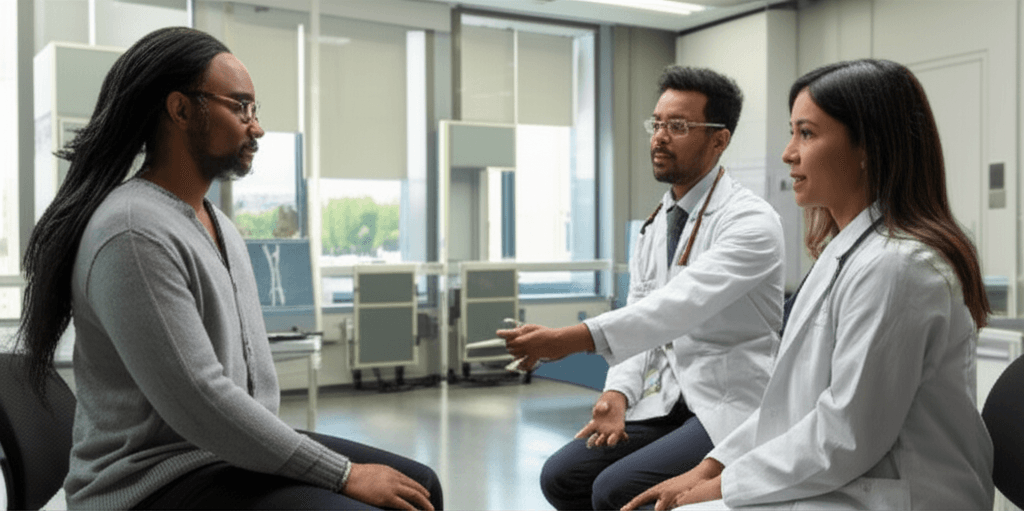
Patients with communication barriers — limited health literacy, non-native language, cognitive impairment, hearing loss — present additional communication challenges that simulation can address. Scenarios requiring communication through interpreters, the use of simplified language and visual aids, and check-back techniques to verify patient understanding prepare clinicians for the full diversity of patients they will serve.
Feedback Mechanisms in Communication Training
Effective feedback on communication is more complex than feedback on procedural skills. It requires attention to content, language, timing, tone, and the patient's emotional response. Video review of simulated clinical encounters is the most powerful feedback mechanism because it allows the learner to observe themselves as a patient would experience them — a perspective that is impossible to develop without external observation.
Standardized patient instructors who provide feedback immediately following simulated encounters add an additional layer: the subjective experience of being the patient in the encounter. When a standardized patient describes feeling dismissed, rushed, or confused during an interaction, it provides a more personally compelling feedback message than any assessor checklist can deliver.