High-Fidelity vs. Low-Fidelity Medical Simulation: Choosing the Right Tool
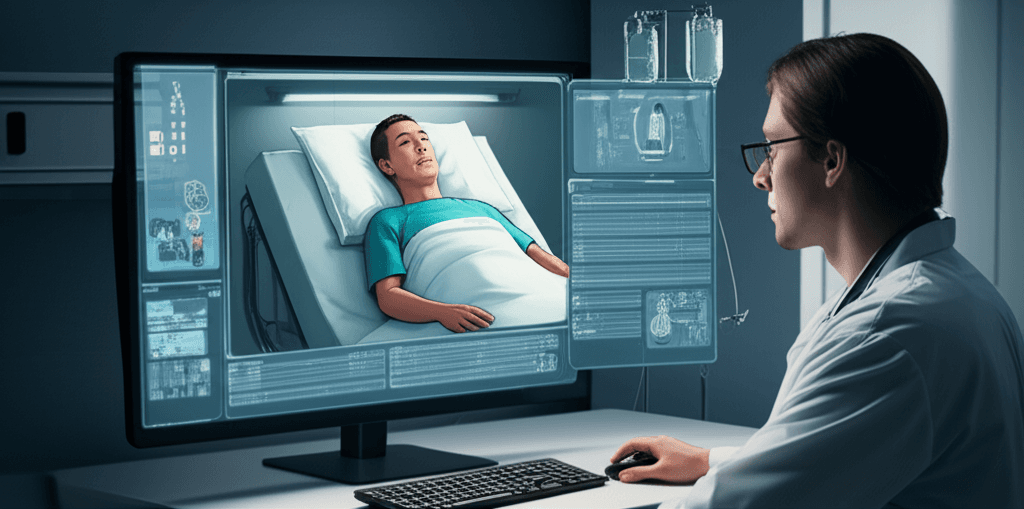
The medical simulation market spans an enormous range of technological sophistication, from simple anatomical models costing a few hundred dollars to comprehensive high-fidelity simulation environments costing millions. The intuitive assumption is that higher fidelity produces better learning. Research complicates this assumption significantly. The relationship between fidelity and educational effectiveness depends heavily on the learning objective, the learner's stage of training, and the quality of the educational design surrounding the simulation experience.
Defining Fidelity in Medical Simulation
Fidelity in simulation refers to the degree to which a simulator replicates the characteristics of the real clinical situation it represents. Physical fidelity concerns the realistic appearance and function of the simulator itself. Psychological fidelity refers to the authenticity of the experience from the learner's perspective — whether the situation feels real enough to engage full cognitive and emotional investment. Environmental fidelity concerns the accuracy of the physical setting surrounding the simulation.
Critically, high physical fidelity does not guarantee high psychological fidelity, and psychological fidelity — not physical fidelity — is what drives learning. A simple case-based scenario presented on a screen can generate genuine cognitive engagement and emotional investment if the scenario design is compelling and the learner is sufficiently invested in the learning process. A technically impressive high-fidelity mannequin deployed in a poorly designed scenario with inadequate facilitation may produce superficial learning despite its cost.
Evidence on Fidelity and Learning Outcomes
Research comparing high and low-fidelity simulation across various educational contexts has produced nuanced findings. For novice learners, simple low-fidelity simulations often produce learning equivalent to high-fidelity alternatives, because novices cannot process the additional complexity that high-fidelity environments introduce. The cognitive load of managing a highly realistic scenario may actually interfere with foundational skill acquisition in early training stages.
For advanced learners practicing complex, integrated clinical tasks, high-fidelity simulation provides educational advantages. Expert clinicians practicing crisis resource management, resuscitation leadership, or rare high-acuity procedures benefit from the increased realism because they have the foundational skills to engage with the complexity.
Matching Fidelity to Learning Objectives
The principle of matching fidelity to learning objectives provides a practical framework for simulation investment decisions. Procedural skills at the initial learning stages are well-served by targeted task trainers and models that provide physical fidelity for the specific skill while reducing extraneous cognitive demands. Communication skills are effectively developed through virtual patient platforms and standardized patient encounters, which provide sufficient psychological fidelity without requiring physical simulation infrastructure.
Team training, resuscitation scenarios, and complex decision-making under uncertainty benefit most from high-fidelity environments where the full clinical context supports the learning objective. Investment in high-fidelity simulation is most justified when the learning objective genuinely requires it — not as a default for all simulation-based training.
Practical Investment Guidance
Institutions building or expanding simulation programs should begin by mapping their learning objectives before selecting simulation technology. For most programs, a mixed portfolio approach — combining low-fidelity task trainers, virtual patient software, standardized patient programs, and high-fidelity mannequins for specific applications — produces better educational outcomes per dollar invested than concentrating resources entirely on high-fidelity technology.
The most important investment in any simulation program is in well-trained facilitators. Research consistently finds that the quality of debriefing and facilitation has a larger effect on learning outcomes than the fidelity of the simulation technology. A moderately equipped simulation program with excellent facilitation will outperform a lavishly equipped program with poor educational design.