Standardized Patients vs Virtual Patients: Cost and Effectiveness
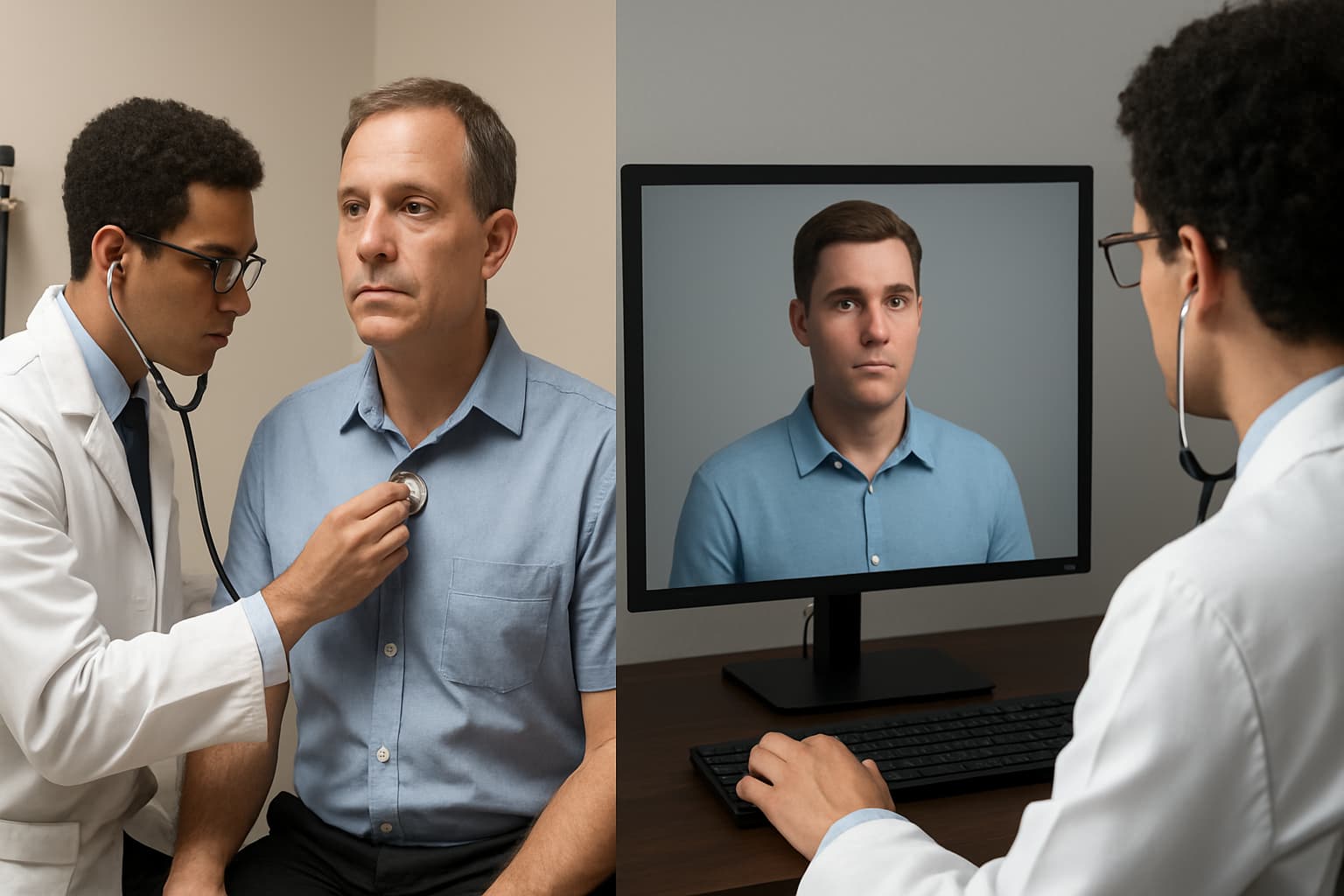
Standardized patients, trained actors who portray clinical scenarios, have been a cornerstone of medical education for decades. They provide realistic patient interactions and are the basis for OSCE examinations worldwide. Virtual patients, software-based clinical simulations powered by AI, are an increasingly viable alternative. Both approaches have distinct strengths, and understanding the trade-offs helps institutions make informed deployment decisions.
Cost Structure Comparison
Standardized patient programs incur costs per encounter: actor compensation typically ranges from fifty to several hundred dollars per student per hour, depending on case complexity and geographic market. Training new standardized patients for complex cases requires additional investment. A medical school running OSCE examinations for two hundred students across twelve stations needs dozens of standardized patients performing simultaneously, with costs scaling linearly with student numbers.
Virtual patient platforms operate on a different cost model. Annual licensing provides unlimited student access. The marginal cost of one additional student session is essentially zero. For institutions with large student bodies, the cost per student hour of virtual simulation drops dramatically as utilization increases. A platform serving five hundred students across hundreds of cases achieves a cost per student hour that standardized patients cannot match.
Scalability and Availability
Standardized patients are a limited resource. Finding, training, and scheduling actors for medical scenarios requires significant logistical effort. Complex cases (elderly patients, pediatric scenarios, psychiatric presentations) are particularly challenging to cast. Standardized patient programs typically operate during business hours in dedicated facilities.
Virtual patients are available twenty-four hours a day, require no scheduling, and can represent any demographic, age group, or clinical presentation. A student can practice a rare endocrine case at midnight without requiring anyone else's presence. This availability transforms clinical practice from a scheduled, supervised activity to a self-directed learning resource.
Consistency and Standardization
Despite rigorous training, standardized patients introduce variability. Each actor interprets the role slightly differently, and performance can vary across a long examination day. Calibration sessions reduce but do not eliminate this variability. When assessment fairness is critical, this variability is a genuine concern.
Virtual patients present identical scenarios to every student, every time. The same questions receive the same responses. The same clinical findings are presented consistently. This standardization makes virtual patients superior for formative assessment where the goal is comparing student performance under controlled conditions.
Where Standardized Patients Excel
The strengths of standardized patients are real: physical presence, non-verbal communication, emotional authenticity, and the ability to assess bedside manner and communication skills. A standardized patient can express pain, anxiety, frustration, and confusion in ways that build empathy and interpersonal skills. They can physically participate in examination maneuvers. They provide feedback from the patient perspective that software cannot yet replicate.
For assessments focused on communication skills, professionalism, and physical examination technique, standardized patients remain the standard. These are dimensions that current virtual patient technology does not fully address.
Where Virtual Patients Excel
Virtual patients are superior for clinical reasoning assessment, case volume, specialty coverage, and cost efficiency. When the goal is developing differential diagnosis skills across hundreds of cases spanning twelve medical specialties, virtual simulation delivers educational volume that standardized patient programs cannot economically provide.
AI-powered virtual patients that engage in natural conversation are narrowing the gap in interaction realism. While they cannot yet replicate physical presence, they can engage in extended clinical dialogues that test communication skills, history-taking technique, and clinical reasoning simultaneously.
The Optimal Combination
Most medical education leaders advocate a combined approach: virtual patients for high-volume clinical reasoning practice and formative assessment; standardized patients for communication skills training, physical examination practice, and summative OSCE examinations. This combination leverages the strengths of each modality while managing the cost and scalability limitations of standardized patients.
Institutions that deploy virtual patients for routine case practice often find that their standardized patient programs become more effective, because students arrive at standardized patient encounters with better clinical reasoning skills from virtual practice, allowing the standardized patient interaction to focus on the interpersonal and physical skills that it does best.