Training for Telemedicine: How Virtual Patients Prepare Clinicians for Remote Care
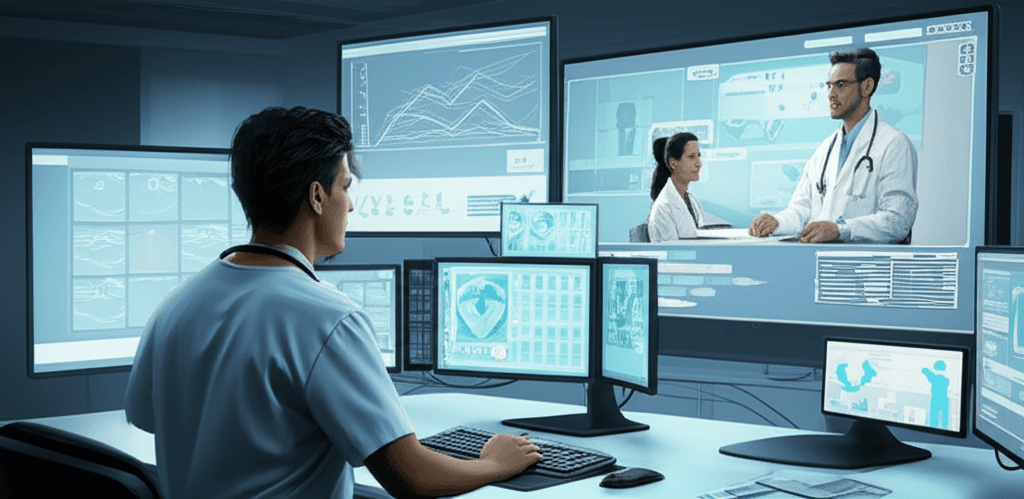
The COVID-19 pandemic accelerated the adoption of telemedicine from a niche modality to a mainstream component of clinical practice. While adoption has moderated from pandemic peaks, telehealth has permanently expanded the clinical landscape: patients expect remote consultation options, regulations have been updated to support telemedicine practice, and most healthcare systems now operate hybrid care models that require clinicians to be effective in both in-person and virtual environments. Yet clinical training programs have been slow to adapt to this reality, leaving graduates underprepared for the distinctive skills that effective telemedicine requires.
What Makes Telemedicine Clinically Distinctive
Telemedicine clinical encounters differ from in-person encounters in several ways that require specific skills. Physical examination is limited — the clinician must guide patients through self-examination, rely on the patient's own descriptions of symptoms, and make diagnostic inferences without the physical data that in-person examination provides. Technology management adds complexity: audio and video quality issues, patient unfamiliarity with the platform, and connectivity problems all require professional management that does not apply to in-person care.
Patient selection for telemedicine is itself a clinical skill. Not all conditions are appropriate for remote management. The clinician must assess at the outset whether the presentation can be safely managed remotely or requires in-person evaluation, and must communicate this assessment in a way that does not cause unnecessary alarm while ensuring that patients requiring in-person care actually access it.
Virtual Patients for Telemedicine Training
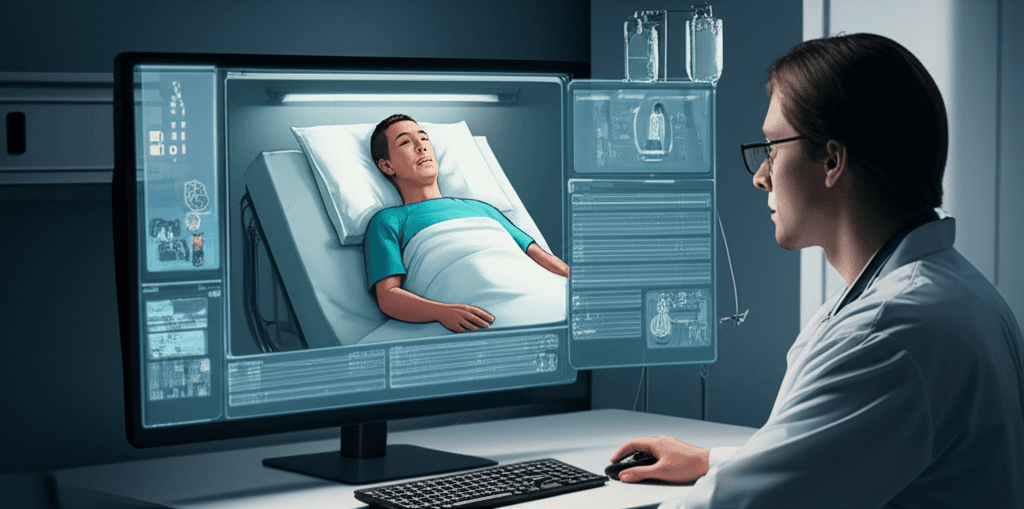
Virtual patient platforms can be specifically configured to simulate telemedicine encounters. Rather than a physical examination, the clinician must conduct a structured remote assessment, asking the patient to describe symptoms in detail and, where appropriate, perform guided self-assessment. The scenario can include realistic technology complications — audio distortion, video freezing, patient difficulty following instructions — that develop the professional skills to manage these disruptions without compromising the clinical quality of the encounter.
Telemedicine-specific virtual patient scenarios can cover the full range of presentations appropriate for remote management: minor illness, mental health check-ins, chronic disease monitoring, medication review, and follow-up after in-person care. Each type of encounter has its own clinical workflow and communication requirements that benefit from structured practice.
Safety and Quality in Remote Care
Safety in telemedicine requires specific protocols that clinicians must know and follow. Documentation of telemedicine encounters, consent processes specific to remote care, prescription practices that comply with telemedicine regulations, and escalation pathways for patients who deteriorate or disclose risk that requires immediate in-person intervention all represent areas where telemedicine practice differs from in-person care. Simulation-based training in these protocols ensures that clinicians are prepared for the regulatory and clinical safety requirements of remote practice.
Quality indicators for telemedicine — patient satisfaction with the encounter, appropriateness of remote versus in-person referral, prescribing accuracy, and follow-up adherence — can be tracked through virtual patient performance data and used to inform ongoing professional development. The same data-driven approach to quality improvement that simulation enables for in-person care applies equally to telemedicine training.