3D Digital Anatomy vs. Cadaver Dissection: A Practical Comparison for Educators
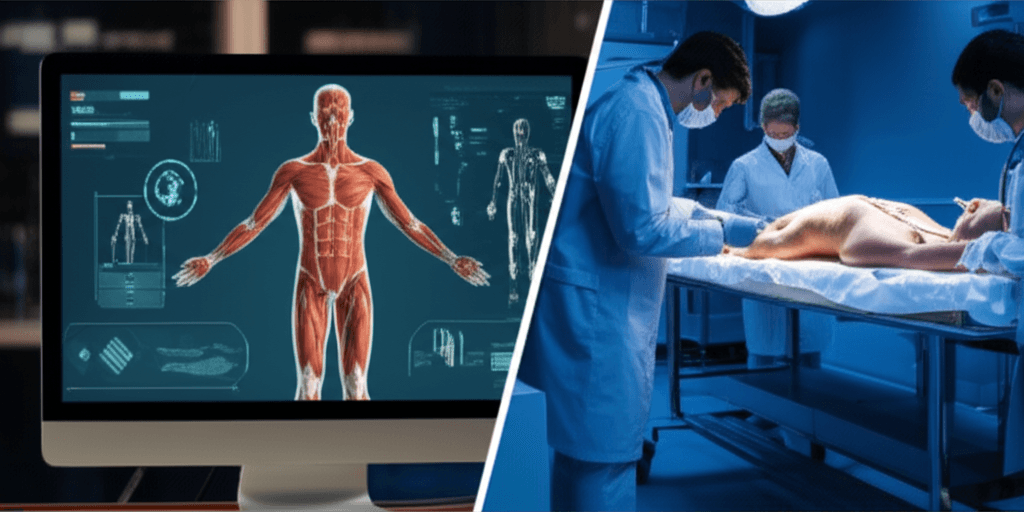
Anatomy education has relied on cadaver dissection for centuries, and for good reason. Dissecting a human cadaver provides direct contact with anatomical structures, an understanding of tissue characteristics and spatial relationships that no text or image can fully convey, and an early encounter with mortality that many medical educators consider professionally formative. But cadaver dissection is expensive, logistically complex, ethically contested in some cultural contexts, and increasingly unable to meet the volume demands of growing medical student populations. Digital 3D anatomy platforms have emerged not as replacements for dissection but as complementary tools that address these limitations while adding educational capabilities that cadavers fundamentally cannot provide.
What Cadaver Dissection Provides
The irreplaceable qualities of cadaveric anatomy include tactile understanding of tissue properties — the density of fascia, the pliability of muscle, the feel of organs — that directly inform surgical and procedural skill. Anatomical variation is perhaps equally important: real human cadavers display the natural variability in structure that clinical anatomy presents, teaching students that anatomy textbooks describe idealized representations of structures that vary substantially in practice.
The social dimensions of cadaver dissection — working in teams, engaging with mortality, and the tradition of honoring the individuals who donated their bodies — contribute to professional identity formation in ways that digital platforms cannot replicate. These dimensions should be weighed in any honest comparison.
What Digital 3D Anatomy Adds
Three-dimensional digital anatomy platforms provide capabilities that cadaver dissection structurally cannot. Structures can be isolated, rotated, and examined from any angle, allowing students to understand three-dimensional spatial relationships in ways that dissection obscures. Individual structures can be highlighted, labeled, and explored without damaging surrounding anatomy. Pathological states can be demonstrated alongside normal anatomy — a 3D model can show what an infarcted heart looks like compared to healthy myocardium, a display that cadaver dissection cannot provide on demand.
Accessibility is a fundamental advantage. Digital anatomy can be accessed at any time, on any device, without scheduling constraints or preparation requirements. Students can review before clinical encounters, reinforce learning after lectures, and self-assess at their own pace. Clinical teams can access detailed anatomical reference material in the moments before procedures. This always-available accessibility creates learning opportunities that a single anatomical dissection course cannot match.
Evidence on Learning Outcomes
Studies comparing anatomy learning through cadavers versus digital platforms have produced mixed results, which reflects the complexity of the comparison. For initial knowledge acquisition, digital platforms often perform comparably to cadaver dissection, particularly for understanding gross anatomy and spatial relationships. For detailed knowledge of tissue properties and anatomical variation, cadaver dissection retains advantages.
The most robust finding is that combining cadaver dissection with digital 3D learning produces better outcomes than either alone. Students who use digital anatomy for preparation and review, combined with cadaver dissection for direct tissue experience, demonstrate superior spatial anatomy understanding compared to cadaver dissection without digital complement.
Practical Recommendations for Anatomy Curricula
Medical programs with access to cadaveric anatomy should use digital platforms as preparation, reinforcement, and extension tools rather than replacements. Pre-dissection digital exploration of the structures to be dissected improves engagement and learning efficiency during the dissection session. Post-dissection digital review reinforces spatial understanding and allows students to revisit structures they found confusing.
Programs without cadaver access — whether for logistical, financial, or cultural reasons — can build effective anatomy curricula using digital 3D platforms as the primary tool, recognizing that this approach will require deliberate attention to tissue property understanding through clinical procedural training as students advance. The goal in either case is comprehensive anatomical competency, and the tools available to achieve it are richer than they have ever been.