The Science of Debriefing: How Reflection Amplifies Simulation Learning
In simulation-based medical education, there is a saying that the scenario is just the trigger — the real learning happens in the debrief. Research supports this claim. Studies comparing simulation with and without structured debriefing consistently find that debriefing is responsible for the majority of measurable learning gains. The experience of simulating a clinical event, while valuable, does not automatically produce durable learning. It is the structured reflection that follows that converts experience into insight and insight into changed behavior.
Models of Debriefing
Multiple structured debriefing frameworks have been developed and validated for use in medical simulation. Debriefing with Good Judgment (DWJ), developed by Rudolph and colleagues, is widely used because it helps facilitators understand the mental models and assumptions that drove learner behavior — addressing the 'why' behind observed actions rather than just the 'what'. Alternatives include the PEARL framework, the 3D model, and DEBRIEF, each with particular strengths in different contexts.
Despite differences in structure, effective debriefing models share common elements: a clear opening that establishes psychological safety, a description phase where learners describe what happened, an analysis phase where the reasons behind behaviors are explored, and a synthesis phase where learnings are extracted and applied to future practice. Programs that adopt a structured framework consistently produce better debrief quality than those that rely on facilitator improvisation.
Psychological Safety as a Prerequisite
Effective debriefing depends on psychological safety — the learner's confidence that honest discussion of errors and uncertainty will not result in judgment, embarrassment, or professional consequences. Without psychological safety, learners become defensive, withhold honest self-assessment, and focus on impression management rather than learning. The facilitator's responsibility for establishing psychological safety begins before the simulation starts and is reinforced throughout the debrief.
Practically, psychological safety requires explicit statements about the learning purpose of simulation, confidentiality commitments regarding what is discussed in the simulation suite, and facilitator behaviors that model curiosity and non-judgment rather than evaluation. The distinction between formative and summative simulation must be clearly communicated — when performance is being assessed rather than just practiced, the dynamics change and this must be acknowledged.
Debriefing Techniques That Work
Advocacy-inquiry is one of the most evidence-supported debriefing techniques. Rather than telling learners what they did wrong, the facilitator shares an observation (advocacy) and then asks an open question about the reasoning behind the behavior (inquiry). This approach respects learner agency, uncovers the assumptions driving behavior, and creates space for genuine conceptual change rather than surface-level behavioral correction.
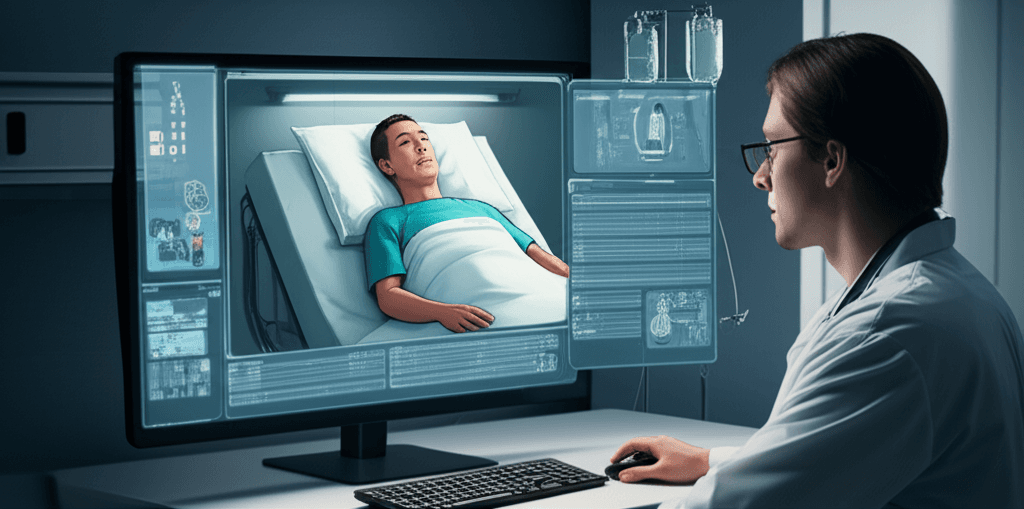
Video review is a powerful complement to verbal debriefing. Reviewing recorded simulation footage removes the subjective quality from discussions about what happened, allowing both facilitator and learner to observe behavior as external observers. Studies show that video-assisted debriefing accelerates skill development and improves the specificity of feedback compared to verbal-only debriefing.
Faculty Development for Debriefing
Debriefing is a teachable skill, but it requires deliberate development. Most clinicians who serve as simulation facilitators have received little or no formal training in debriefing technique. Simulation programs that invest in facilitator training — through workshops, observed practice with feedback, and peer review of debriefing sessions — consistently outperform those that assume clinical expertise translates to facilitation effectiveness.
Simulation centers should implement quality assurance processes for debriefing. Regular review of debrief recordings, peer observation, and structured facilitator feedback sessions create the same learning environment for educators that simulation creates for learners. The investment in faculty debriefing skills is among the highest-return investments available to simulation program directors.