Medical Simulation in Developing Countries: Affordable Approaches
Medical simulation is no longer a luxury reserved for well-funded institutions in wealthy countries. The educational evidence is too strong and the need too great to accept that resource constraints should permanently exclude institutions from adopting simulation-based education. The challenge is not whether simulation is appropriate for resource-limited settings but how to implement it effectively within genuine constraints of budget, infrastructure, and technical capacity.
Across Africa, South Asia, Southeast Asia, Central Asia, and Latin America, medical schools are finding creative approaches to simulation that deliver meaningful educational outcomes without requiring the infrastructure and budgets of institutions in high-income countries. Their experiences provide a practical playbook for other institutions facing similar constraints.
The global healthcare workforce shortage makes effective medical education not just an institutional priority but a public health imperative. The World Health Organization estimates that the world will face a shortfall of eighteen million healthcare workers by 2030, concentrated in low-income and lower-middle-income countries. Improving the quality and efficiency of medical training in these regions through simulation technology is a direct contribution to global health outcomes. The economic argument and the humanitarian argument align: simulation investment in developing countries is both strategically sound and morally essential.
The Resource Constraint Reality
Resource limitations in developing countries are multidimensional. Budget constraints are the most obvious: annual per-student expenditure at medical schools in low-income countries can be a fraction of comparable institutions in high-income settings. But budget is not the only constraint.
Infrastructure limitations include unreliable electricity, limited internet bandwidth, and insufficient physical space for dedicated simulation centers. Human resource constraints include few faculty with simulation expertise, limited technical support staff, and high faculty turnover as experienced educators leave for better-compensated positions. Supply chain limitations make equipment procurement and maintenance difficult, with long lead times for specialized educational technology.
Effective simulation implementation in these settings must address all of these constraints simultaneously. A platform that requires reliable high-bandwidth internet will fail in settings where connectivity is intermittent. A program that depends on specialized technical support will struggle where such expertise is unavailable.
Software-First Strategies for Maximum Impact
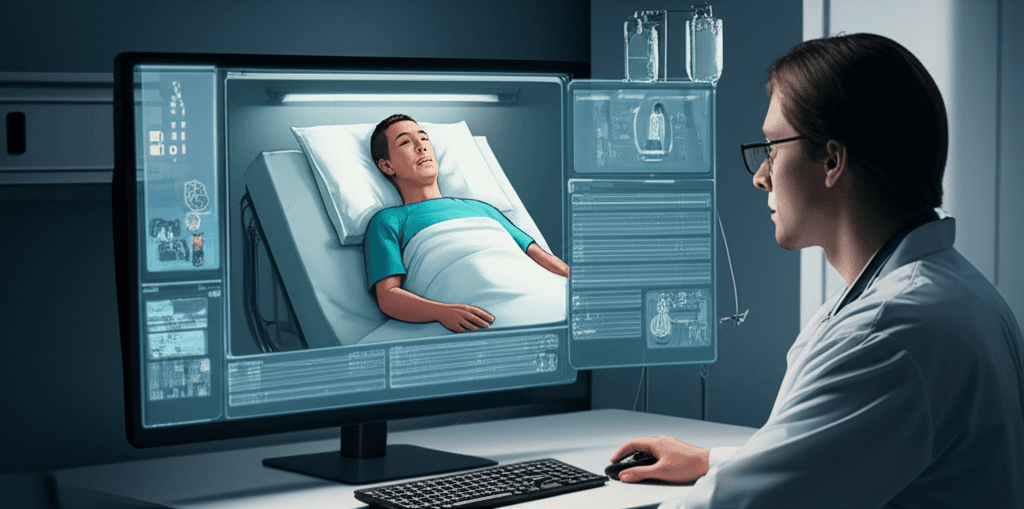
Virtual patient platforms offer the highest educational impact per dollar in resource-limited settings. A single software license can provide hundreds of clinical cases to every student at the institution, running on existing computers, tablets, or even smartphones. No dedicated physical space is required, no specialized equipment needs maintenance, and no additional staff need to be hired.
The key selection criteria for virtual patient platforms in developing countries include offline capability for settings with unreliable internet, low bandwidth requirements for areas with limited connectivity, multilingual support for institutions where English is not the primary language of instruction, and case content that includes diseases and presentations relevant to the local disease burden rather than exclusively reflecting the epidemiology of high-income countries.
Institutions should evaluate whether platforms can function effectively on older hardware and lower-specification devices. Students at many institutions use personal devices that may be several years old, and institutional computer labs may have limited processing power. A platform that requires the latest hardware excludes a significant portion of the target user base.
Mobile-Based Simulation: Reaching Students Where They Are
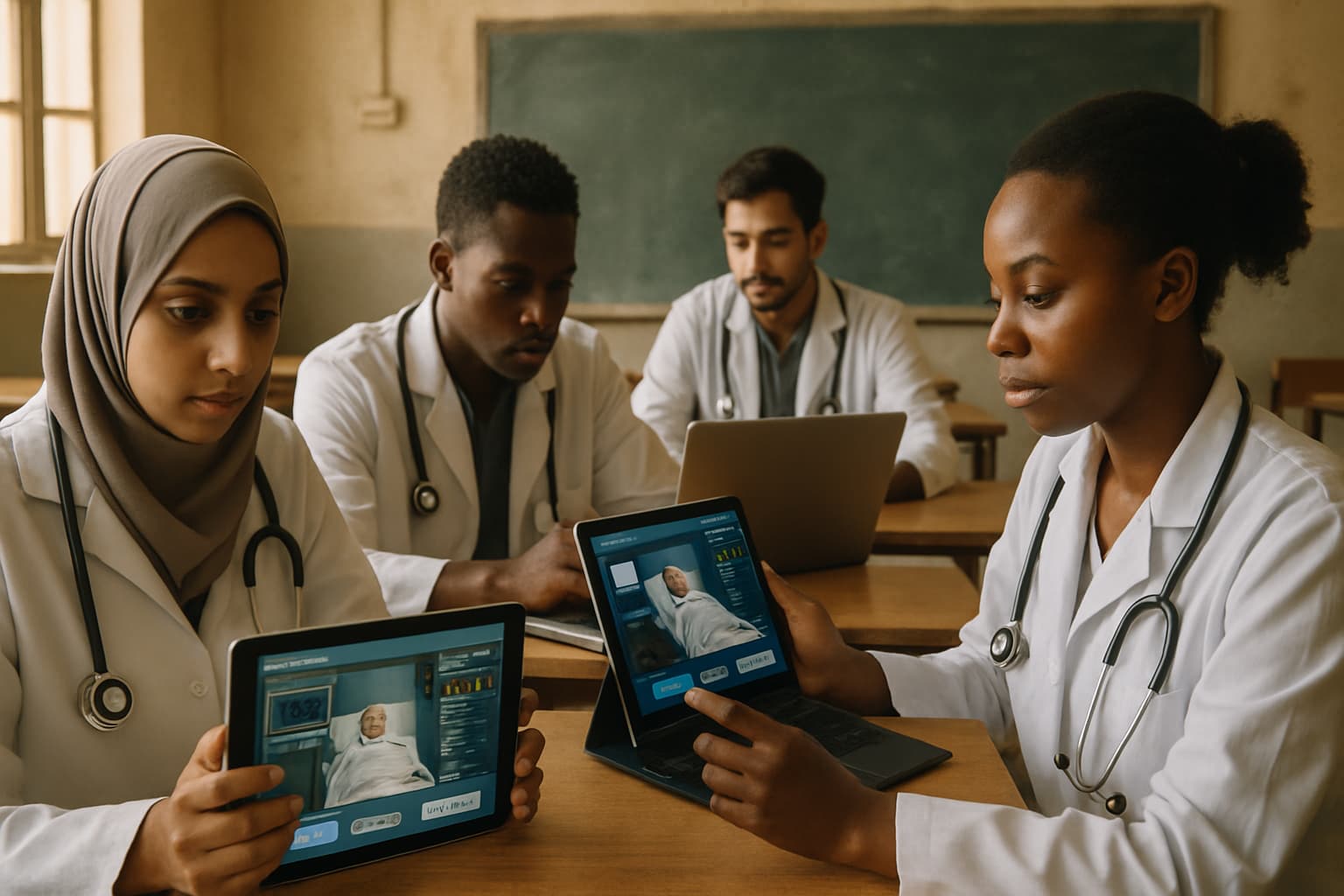
In many developing countries, smartphone penetration exceeds computer access. Mobile-based simulation approaches leverage this existing infrastructure to deliver clinical reasoning practice without requiring computer labs or dedicated devices.
Mobile-optimized virtual patient platforms allow students to work through clinical cases on their phones during commutes, between classes, or in clinical settings. While the experience may be less immersive than a desktop simulation, the accessibility advantage is substantial. A student who practices clinical reasoning for fifteen minutes daily on their phone accumulates significantly more practice hours than one who can only access simulation during scheduled computer lab sessions.
For institutions considering mobile-based approaches, data cost is a critical factor. In many developing countries, mobile data is expensive relative to income. Platforms that minimize data consumption through efficient content delivery, offline content caching, or downloadable case packages are more viable than those requiring continuous high-bandwidth connections.
The user experience on mobile devices must be thoughtfully designed for small screens. Clinical cases that work well on desktop computers may be difficult to navigate on a phone if the interface was not designed for mobile use. Evaluate mobile simulation platforms on actual student devices, not laboratory conditions, to understand the real user experience. A platform that is technically mobile-compatible but practically unusable on small screens provides no educational value regardless of its clinical content quality.
Train-the-Trainer Models for Sustainability
External experts can help launch a simulation program, but sustainability requires local expertise. The train-the-trainer model develops local faculty as simulation educators who can then train their colleagues, creating a self-sustaining capacity development cycle.
Effective train-the-trainer programs combine platform-specific technical training with simulation pedagogy. Faculty need to learn not just how to operate the software but how to integrate simulation into their teaching, facilitate debriefing sessions, and use simulation assessment data to guide student development.
Partner with international organizations and vendor-provided training programs to develop initial trainer capacity, then build internal training infrastructure that reduces dependence on external support over time. Regional collaboration between institutions in similar resource contexts can further strengthen this capacity by sharing expertise, cases, and best practices.
Partnership Models That Work
International partnerships between institutions in high-income and low-income countries can accelerate simulation program development. The most effective partnerships are bidirectional: the resource-limited institution gains access to technology, expertise, and sometimes funding, while the high-income institution gains research opportunities, global health education experiences, and insight into healthcare delivery challenges in different contexts.
Government and multilateral partnerships can provide larger-scale support. National health ministries that recognize the importance of simulation for healthcare workforce quality may fund platform licenses for all medical schools in the country, achieving volume discounts and standardized training approaches. International development organizations and global health foundations have increasingly included medical education technology in their funding portfolios.
Vendor partnerships are also valuable. Many simulation platform vendors offer discounted or subsidized licensing for institutions in low-income countries, recognizing both the social impact and the long-term market development opportunity. These arrangements can make institutional-grade platforms accessible at a fraction of their standard commercial pricing.
Measuring Impact in Resource-Limited Settings
Outcome measurement is even more important in resource-limited settings than in well-funded ones, because every investment must demonstrate clear educational value to justify its continuation. Establish baseline clinical assessment data before implementing simulation, then track the same metrics after implementation to demonstrate impact.
Focus on practical, measurable outcomes: student performance on clinical skills assessments, confidence ratings before and after clinical rotations, and faculty evaluation of student preparedness for clinical work. These metrics do not require sophisticated analytics infrastructure and can be collected using simple survey instruments and existing assessment systems.
Share outcome data openly with the global medical education community. Institutions in developing countries that demonstrate successful simulation implementation with limited resources provide valuable evidence that benefits similar institutions worldwide. Published case studies, conference presentations, and collaborative research partnerships amplify the impact of local success beyond institutional boundaries.
Curriculum Adaptation for Local Disease Burden
Simulation platforms developed primarily for high-income country markets may not include cases that reflect the disease burden in developing countries. Tropical diseases, infections that are rare in wealthy nations but common in resource-limited settings, malnutrition-related conditions, and diseases associated with limited healthcare access may be underrepresented or absent from standard case libraries.
When evaluating platforms, assess the availability of cases relevant to your local epidemiology. Platforms that offer case authoring tools allow institutions to develop locally relevant content without depending on the vendor to address regional disease patterns. Faculty with clinical expertise in local conditions can create cases that supplement the platform's standard library, building an educational resource that serves the specific needs of their student population.
Consider collaborative case development across institutions within the same region. Medical schools in Sub-Saharan Africa face similar disease burden patterns; institutions in Southeast Asia share common tropical medicine challenges. Regional case development consortia can produce comprehensive, locally relevant case libraries more efficiently than individual institutions working in isolation. These shared resources strengthen simulation education across all participating institutions while distributing the development effort.
The path forward for medical simulation in developing countries is not about waiting for budgets to match those of wealthy institutions. It is about identifying the highest-impact, lowest-cost interventions available today and implementing them with the same rigor and intentionality that well-funded programs apply. Virtual patient platforms, mobile-optimized delivery, train-the-trainer models, and regional collaboration represent a realistic pathway to meaningful simulation education that any institution can begin pursuing immediately. The students who will become tomorrow's healthcare workforce in the regions that need them most deserve access to the best educational tools their institutions can provide. Modern simulation technology makes that aspiration achievable at a fraction of historical costs.