Building a Safety Culture Through Medical Simulation
Patient safety culture encompasses the attitudes, behaviors, and organizational norms that determine how seriously safety is prioritized in a healthcare setting. Organizations with strong safety cultures have lower adverse event rates, higher near-miss reporting, better staff wellbeing, and more effective responses when things go wrong. Simulation training contributes to safety culture development by providing shared experiences that build common values, communication practices, and responses to error.
From Individual Competency to Systemic Safety
Traditional medical education focuses on individual competency — can this clinician diagnose correctly, perform the procedure accurately, prescribe appropriately. Patient safety, however, is a systemic property that emerges from the interaction of many individual clinicians, processes, and environmental factors. No matter how competent individual clinicians are, poor system design, inadequate communication, and cultural barriers to speaking up will produce preventable harm.
Simulation can develop individual competencies, but its most powerful contribution to patient safety is at the team and organizational level. Simulation scenarios designed around actual adverse events or near misses from the organization's own experience create shared learning that addresses the specific vulnerabilities of the local system. This contextually relevant simulation is more likely to change behavior than generic patient safety training.
In Situ Simulation as Safety Assessment
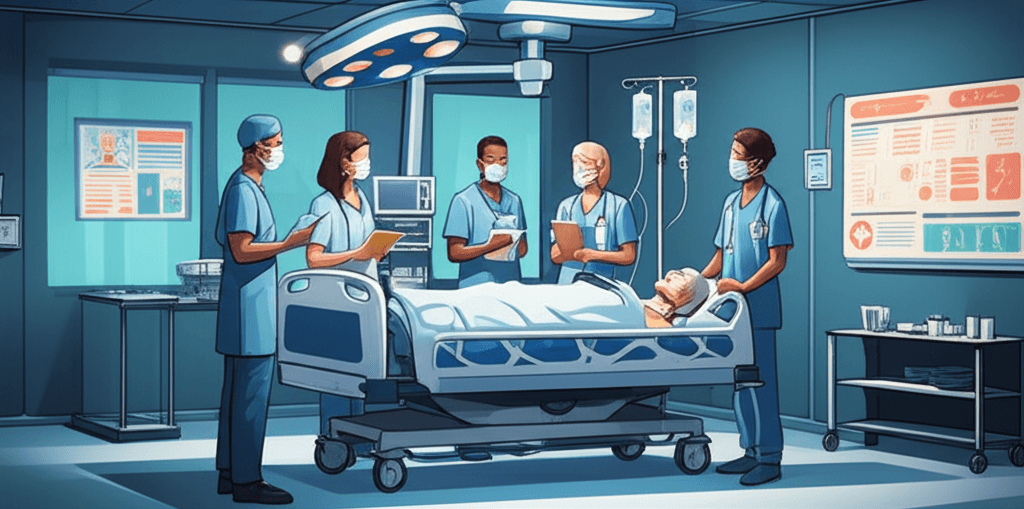
In situ simulation — conducting simulation exercises in the actual clinical environment rather than a dedicated simulation center — serves both educational and safety assessment functions. A simulation conducted in an ICU using the actual equipment, space, and staffing of that unit will reveal latent safety threats that would never be apparent in a simulation center: a medication drawn from the wrong location, a resuscitation cart in a position that impedes access, a monitoring system with a confusing user interface.
Organizations that conduct regular in situ simulation consistently identify latent safety threats that can be addressed before they cause patient harm. This proactive safety surveillance function represents a compelling return on investment for simulation programs — the cost of finding and correcting a latent threat in simulation is far lower than the cost of a preventable adverse event.
Psychological Safety and Error Disclosure
Safety culture depends on the willingness of staff to report errors, near misses, and safety concerns without fear of punitive consequences. Punitive cultures suppress reporting, deprive organizations of the information they need to improve, and create an environment where known hazards persist unaddressed. Simulation can develop error disclosure skills and model non-punitive responses to error in a safe practice environment.
Scenarios specifically designed around error disclosure — how to inform a patient that an error has occurred, how to report a near miss, how to escalate a safety concern to leadership — normalize these practices and provide skill development before clinicians face these situations in real clinical contexts.