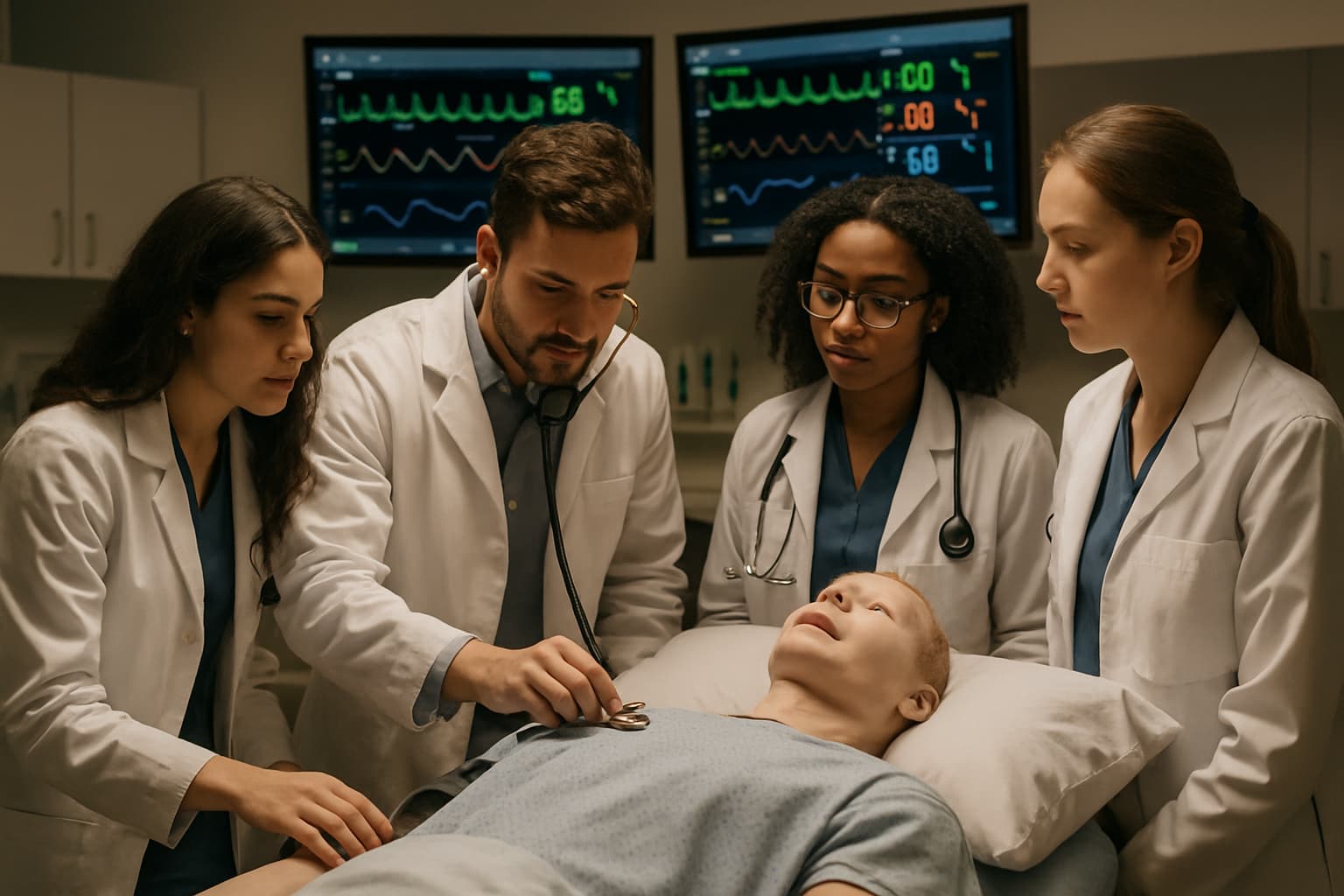
How to Prepare for OSCE Exams With Virtual Cases
OSCE preparation improves when students rehearse the exact reasoning, communication, and station sequencing they will face under timed conditions.
Interactive case preview
General medicine OSCE warm-up case
A free sample encounter that helps learners rehearse structured history-taking and prioritized next steps before timed assessment.
Open sample experienceWhy educators search for this topic
OSCE preparation improves when students rehearse the exact reasoning, communication, and station sequencing they will face under timed conditions. Search intent is usually practical: curriculum leads are trying to solve a teaching problem inside internal medicine training, not just collect another theory article.
The core gap is consistent across programs: Many students prepare for OSCEs by memorizing checklists, but they get too little realistic repetition under time pressure. Articles that answer that operational question clearly are the ones most likely to rank and to convert readers into qualified product exploration.
What a stronger teaching model looks like
Virtual cases can be used as station warm-ups, independent homework, and remediation tools that mimic the cognitive flow of assessment. That makes the topic relevant for both undergraduate programs and postgraduate refreshers, because the same content can support guided seminars, self-study, and structured remediation.
For SEO, this article targets the primary keyword "how to prepare for osce exams with virtual cases" while naturally supporting secondary searches such as osce preparation online, virtual osce cases, clinical exam practice. For curriculum teams, it frames the problem in the language they use internally when planning labs, OSCE prep, and faculty time allocation.
How the specialty-specific funnel connects to VARGATES
That makes OSCE content one of the strongest organic funnel categories because readers are actively looking for practice tools. The product fit is strongest when readers can move directly from an educational concept into a sample experience, which is why every article in the hub points to a relevant specialty case preview instead of a generic homepage CTA.
This article uses a internal medicine example: A free sample encounter that helps learners rehearse structured history-taking and prioritized next steps before timed assessment. The goal is not to close on the page. The goal is to help professors imagine assigning the case type and help students imagine practicing it immediately.
Implementation notes for program directors
This outline is a parent article that can later anchor a larger OSCE cluster for station-specific landing pages. That matters for organic acquisition because the reader is often a professor, department lead, or digitally curious student comparing platforms before any formal sales conversation starts.
A useful content hub article should therefore do three things at once: answer the keyword cleanly, anchor the discussion in a real specialty workflow, and provide a next step that maps to the audience segment. In this case the next step is either assigning virtual internal medicine cases or practicing a free sample case.
Editorial outline and conversion angle
As a content stub, this page is intentionally built as a detailed outline rather than a final long-form article. It already includes SEO title, SEO description, read-time estimate, specialty tag, target keyword, case preview, and article sections that an editor can expand into a 1,500 to 2,500 word publication.
That structure is enough to launch the /learn hub now, increase indexable surface area, and give the team a scalable template for shipping more medical education content without rebuilding the content system each time.